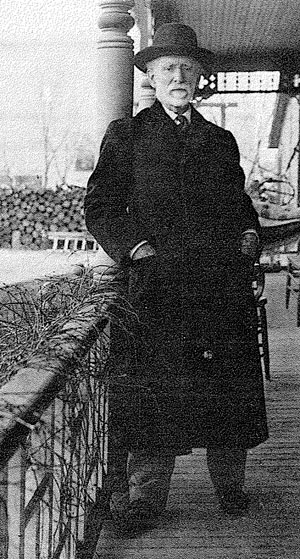
A series of interviews with well known elders of our region, made in the 1970s and 1980s.
Interviews are listed alphabetically by last name of the person(s) being interviewed.
Moncur, Williiam
William Moncur
August 6, 1982
Interviewed by Erin Anderson
EA: Today I will be speaking with Mr. Bill Moncur, a noted local historian and farmer. The subject we are about to discuss is the Brandon-Saskatchewan and Hudson’s Bay Railway, or better known as the Great Northern. Thank you, Mr. Moncur, for coming. When and how did your interest in railways come about?
BM: Well, I guess it would be when the Lauder line was built through our farm back in 1914. I was quite young then, but I can remember quite well when they were laying the trackage after the roadbed had been built and the total unit approaching our farm from the north. The line was built from Lauder to Boissevain and that is so clear to me, the total operation of the rails coming down one side of the crane which was used for lifting the rails into position and the ties coming along on rollers on the other side and they’d be dropping off and there’d be fellows picking up the ties, and carrying them with tongs into position where the steel would be laid and then, when they got enough ties laid to accommodate two rail lengths, this crane would lift the rails from the rollers on the other side, and swing them around and lay them in line and that is so clear yet today. Everything looked so new, new ties of course and they weren’t tarred or anything like that in those days. Another thing that I noted, years later, was that there was pins every so many feet and these pins were the exact center that the surveyors had set up on the road bed after the road bed had been built. And this was the guideline and they had to keep that pin the exact center of the rail. I didn’t know that until years afterward and they were all marked. Those pins were marked. But when they took up the track I don’t know what become of the pins because of the bulldozing . I would love to have one of them today. But anyway, that is what got me interested in the railroad was due to the construction of the Lauder line, or later known as the Blue Flea. And of course, we had the Great Northern to the east of us, just a mile and a half east and I was interested in that also.
EA: The Brandon-Saskatchewan-Hudson Bay Railway was a subsidiary of the Great Northern. When did the construction of the Great Northern start?
BM: That would be in 1905 and that was the survey took place in 1905, right through to Brandon and then work on it, I believe, was begun in the fall of 1905 but proceeded up to the Souris River and Bunclody in 1906 and they had..it was due to construction of the trestle which held them up there. Otherwise they would have been through to Brandon that year. I understand that later that year, that they did have the odd train go through. I’m not sure on that, that is to Brandon. But they were servicing Boissevain in 1906, in the fall of 1906. I believe there was a passenger or two came through but mainly freighting..that is freight for hauling grain . As they proceeded north from the boundary, Bannerman for instance and then coming up to Boissevain and on up to Heyslip and then to Bunclody, they constructed loading platforms of earth beside the side track to accommodate those who cared to load grain and this was certainly taken advantage of because you know it was close to..and shortened the hauling distance for a lot of farmers, in hauling their grain and the Great Northern certainly saw to it that there was adequate boxcars there for them to load and with a system, anyway possible to get the cars loaded. And the McCabe people started construction immediately on elevators at Bannerman, also at Fairburn down here, and at Boissevain and up here at Minto, or at Heyslip rather, and I’m not sure if they built at Heyslip. They had planned to build there but I’m not sure if it was ever built there, the elevator at Heyslip. The completion of the elevator at Bunclody didn’t take place until the next year. But of course, I think possibly you’re aware that in financing the construction of the Great Northern, the McCabe people, the McCabe Grain Company of Duluth, Minnesota financed the construction of the railroad. The Canadian people or government didn’t contribute one cent to its construction, which is quite different to what the C.P.R. and the C.N. and the other Canadian trackage. But it was 1905 that they were surveying and also had started construction and also through 1906, they had reached the river and beyond but the trestle, as I mentioned, held them up a wee bit there.
EA: How was it constructed, the road bed itself?
BM: Of course they did the surveying first and then there was the portion from the Canadian border up to the river, Souris River, to Bunclody, a fellow contracted that, and I just don’t have his name at the moment, I think I could find that. Then he sublet portions of it to individuals, they may be farmers or they may be guys that was interested in construction work. And sometimes they’d sub-let again portions. This is the way they did if they felt they couldn’t..after taking on a portion, that they couldn’t get it done on time because the Great Northern were really pressing them to get the roadbed made . So they would sublet again, but I know the portion from north of town here, from the outskirts of Boissevain north for two or three miles and this one person in particular was Peter Henderson. He had taken on that portion and he took that on with intent of using an elevating grader to do the higher land and when the railway people found that out, they just informed him that no way would he be using an elevating grader because the only way to pack a track, a roadbed for immediate use was that it must be built with horse –drawn scrapers or what they called..kind of a tumble-bug deal. There was wheel scraper. There were certain places where they couldn’t use those wheel scrapers and that was where they were going across a slough area. They’d bring the earth in from one end and dump it as the horses went down to their stomachs in water, and this is how they got across sloughs. In that case, you couldn’t use a wheel scraper, they’d to be some type of slush scraper. They sometimes used this or some type of [fresno] scraper, and that’s how they went about that. Also on the higher land where there was a high knoll, then they had to cut through that and this is where that possibly the pictures you showed me, that maybe this is where they would be where they would use the elevating grader, just to elevator the earth back from that area instead of using scrapers to haul it out of there. Also up at the river, up at Bunclody there, crossing the river, they had to take the banks of the river down, for to graduate the incline to the river and then up the other bank, and the earth that they would cut out of the banks of the river, that was taken down and dumped on the shoulder of the river on the approach to the trestle and that would shorten the length of the trestle and make a better approach as well. This took a tremendous amount of work and time and a steam-shovel was used for to excavate, I guess you would call it, the earth and pile it onto these cars that they had on a light trackage and that would be run down to where they wanted to dump at the embankment. Those empty cars would be pulled back, six or eight at a time, by mule, back to where they would load it up again. There was no problem getting the loaded cars down to the embankment because it was downhill anyway , then they would take off as soon as it was loaded but they had a braking accommodation there to see that they didn’t get out of control and run away on them. They did occasionally get away on them too. But that’s how they went about it to that point and then, of course, the construction of the trestle that would be professional job and that would be done with, I noticed in your pictures that it was all piles, so there would be a pile-driver they used for to drive those piles.
EA: Was there any dynamite used?
BM: The only time they used dynamite there would be when they run into shale. I understand they had to do that a bit up there at Bunclody. It wasn’t that bad but they did run into some of it and so they’d have to use dynamite to move it. Yes, this is true, they would use dynamite. But I never paid too much attention to the embankment there at Bunclody, but I do notice where the highway has cut down through there, there is shale showing, so no doubt they had that problem. But continuing on to Brandon, they had little difficulty getting into Brandon because the type of soil. There was some deep sloughs and that that they had to contend with, like they did in this area. But the soil was lighter up there and it was much easier to handle and so really the building..the construction of the roadbed was fairly rapid. Then into Brandon, they had a few problems when they got into Brandon in that to get to the spot where they wanted to have the station and that. There were those people who were trying to eliminate their position, would you say, or stop them from constructing their station and their freight sheds and all that where the railway company, the Great Northern, would find most convenient for their ice storage and that. They had a big ice storage there as well but anyway it was eventually approved. But their plan to go on to Hudson Bay was simply stopped by those people, the C.P.R in particular influenced the Canadian government not to have the application accepted to go on to Hudson Bay, which was unfortunate. Because as I mentioned, the cost of building that railroad, the Canadian people or the government didn’t have to put one cent into it and I think that the same thing would apply on the construction through to Hudson Bay.
EA: What all towns did the Great Northern pass through on its way from Bannerman to Brandon?
BM: Bannerman, there were lots of little sidings down there. It passed through Desford too, didn’t it, and then Fairburn, wasn’t a town, but it was a station, they had an elevator there. And then Boissevain of course, on through to Minto, up through Heyslip and on to Bunclody. From there I’m not too well acquainted beyond that. There’d be like a flag station, I suppose, or two beyond that to Brandon. I don’t think there were any town sites beyond there, I doubt that, but no doubt there would be sidings or flag stations.
EA: Did the Great Northern provide mixed service?
BM: Yes, they had passenger, freight and express and mail. They had mail service as well, and specials. They ran special trains for special occasions, be it fairs or the 12th of July for the Orangemen or they had special trains for hockey and those trains ran both ways, not only to accommodate people from the Canadian side of the border going for something special at Brandon, they also went down to the States. And apparently the customs people were very lenient on any excursion that went down there. There were no problem getting across like you’d have today, and maybe they weren’t so troublesome then as they are today. But anyway the Great Northern were very accommodating. They always were, all the time they ran.
EA: What type of freight was shipped on the train?
BM: Well, there was a lot of the machinery that came into Canada, quite a great bit of it..well, most of it I guess would come in from the east but they did bring in the machinery from the States up the Great Northern. You know, I don’t whether you’ve ever heard that Charlie Brown, who was the Ford agent here, many years ago in Boissevain and he had his accommodation I think it was in the south end of the Ryan house. It was then..it wasn’t used as the Ryan house anymore. It had been used as a garage and so on but anyway Charlie Brown had the south part of it. In this part of the building, he assembled Ford cars and he would have them shipped up from the factory in Detroit. They were crated and then they would assemble them and that went on for about a year and a half and they found out that this was just too expensive, just too time-consuming to put them together, but there was an assembly plant in Boissevain at one time and that was Charlie Brown’s Ford venture and those vehicles came by freight from the States up the Great Northern and I know several of the guys, a McEvoy worked there, Bill McEvoy, [Jofer Hyden] for another one worked there. Well there was a number of fellows worked under that but it wasn’t profitable. But the other freighting that went on, of course the grain was a great deal and there was a lot of grain shipped along the Great Northern, all the way from Brandon right through to the boundary went to the States and the service was always a little bit better than what the Canadian companies could produce. And then along with that was the express, that is the cream and eggs that we used to ship down to Devil’s Lake and that was a real boon to the farm people all the way along the line right through to Brandon. That was a daily service that they got, ship the one day and your cheque came back the next with the cream can. It was really super and you always got a better price down there than what you could get up here. And of course, then there was objection from the Canadian companies, the creameries, but nonetheless as long as the railroad had the service here, the people made use of it. A lot of fruit came up this way too from the States, a tremendous amount of fruit. Oh you mentioned that. I can remember these big deals that they used to ship the bananas, high crates and I happened to be in when the freight came in, you’d see all these things be there, different cases of lettuce and that. I remember Bob Woods was a drayman at that time that I can remember and he used to come downtown to Atchison and these other places, King’s store, with this fruit. I’d forgotten about that.
EA: Was there daily passenger service?
BM: Um-hum, oh yeah, every day, up and down. You see their time schedule to begin with was reversed. You know what I mean, in that later they changed it so that they’d go up to Brandon in the morning and I think they went through here some time after eight. It was about that time. They would come back in the evening so this was a real thing for the people going up to Brandon to shop and the train would be loaded with people all the way from down by Bannerman and all the way up through to Brandon. They’d shop all day and then come back and then, of course, the storekeepers in Boissevain and the rest really raised a stink about that. They really got up, with the Chamber of Commerce and all that sort of deal. I don’t know what organization, I think the Chamber of Commerce entered into the picture. Anyway they objected to this service and I don’t know what they did with that service because the Great Northern had established that, and I don’t think they listened to the objection for quite a long time. But anyway it was a real service. I know that mother and them often went that way and dad went up there quite often. But you know talking of service, you don’t mind if I jump around a little bit? There was one time that dad and Charlie Dale and one of the Baskervilles had gone to an agricultural thing in Brandon. I forget, I think it was a cattle show of some kindl. Coming home, this was in the spring of the year, the train come to a stop and everybody wondered why they had stopped. Dad and Charlie Dale went out to the step of the coach and here the fireman had taken off his clothes all but his underwear, and he’d gone into the ditch up to his armpits in water and there was a horse tangled in the page wire on the crossing. You know all the railroads were fenced, and he had with him a pair of cutters. Of course, you have all sorts of tools on the train for an emergency. And he cut the page wire section out that was holding the horse where it got tangled up. As soon as the horse got free, it immediately took off, and of course there was a big cheer come up from all those people who were watching. The fireman came back to the engine, and dad said he was a sad-looking sight. Anyway, he climbed back in. Of course, dad asked the fireman when they got to Boissevain, here he was sitting up there nice and fresh back in the cab. Dad wanted to know..asked him what he did with his underwear. He said, “I’ve still got it hanging here in the cab.” But, you know, that was the sort of thing that they would do. I doubt that anything like that would be done today but those are some of the odd things that happened on the railroad.
EA: The Great Northern ran through the Prohibition years, was there any bootlegging done through the train.
BM: There was lots of that done. Of course, Bannerman was the bootleg capital of Manitoba at that time. I know some people don’t really appreciate that, being referred to that way. But nonetheless it was a business at that time. People made a livelihood from it. Most people considered it just another way of getting bread and butter, that’s what it amounted to. I know of one family down in the Bannerman area that put their daughter and son through college by bootlegging. That’s the only source of income that they had, other than farming and that was rather limited. But the father wanted his kids to have an education rather than do what he’d done all his life. So that was just one instance of how the money was used. The small guy never caused a problem; it’s when it got into later years, it got so organized that you had the big guys, like [Bronfman] and those that got into it. That’s when difficulties arose, but there was a lot of liquor brought back and forth on the Great Northern. All the railroads carried it, although it just happened that the Great Northern was in a more ideal location for transporting it, you see, across the line. And so much was fed in from other railroads onto the Great Northern and then went south on it. Then of course, later, they started bringing up liquor from the States as well and ..but I know even on our railroad out there, there was liquor being carried. There was one time there that there was a carload of liquor came into Horton down here. The fellows..it was loaded onto trucks and they took off with it and they got stuck just a short distance from Horton. Maybe you’ve heard about this. Of course they had to unload it in the bush, they couldn’t leave the liquor in the truck. It was a big load too. So they unloaded in the bush. But you know there were some young lads, you know, when you’re young you’re prowling all over the country and eventually come across something sometimes that’s really none of your business. But nonetheless, these lads came across this bunch of liquor in bags, it was all in bags. And so naturally they helped themselves, you see and they stored up for weeks and weeks. This is what happened. And when the guys come back to get their liquor, there was none of it left. But there was another carload of liquor came into Bannerman one time. It came in as a load of coal, it was shipped..supposed to be a load of coal. There was a few ton of coal at the door ,but the rest from there on backward, it was liquor, piled in bags. So anyway the car was billed in and it sat there for a couple of weeks and a fellow wanted a car for to load grain and so he inquired about that car sitting down there. The agent said, “Well, there’s a carload of coal there.” And he says, “Can I go have a look at it?” The guys says, “Sure, but it’s billed in here.” He says, “Who to?” He says, “I don’t know, it just says a carload of coal for Bannerman.” So he looked in it and he came back to the agent. He says, “All that’s in there is just a little heap of coal at the door, there’s nothing else in there.” So the agent and he went back to it and he says, “Well if that’s the case just unload it. And if anybody claims the coal, it will be in a heap beside the track and they can have it.” But what had happened they guys that the liquor had been shipped to, they knew where it was going to be and how it was going to be shipped and so they were there to claim their liquor and of course the coal was left there on the sidetrack. That was the way they shipped it around and a lot of that went on. There was another time that the fellows across the line wanted to put on a big party and they were connected with the Great Northern, you know, they were men working for the Great Northern. They asked for volunteers to go up to Bannerman to get a load of booze and bring it back for this big party they were holding. So an engineer and a fireman took on to run the engine and the coal tender up to Bannerman to get this booze and they headed out, that was from Devil’s Lake..St. John’s, was it? from St. John’s and they got up to Bannerman. Of course the people at Bannerman were waiting for them and they loaded it on to the coal tender, loaded all the booze on. So they backed all the way down to St. John’s. But there was a young guy who was given the job as the agent for the government customs. And he had seen these lights down there and so he phoned St. John’s and told them that there was something unusual going on down here south of Bannerman. And of course the authorities down there, that is the Great Northern people, they did some investigating, and the next morning, when the men came to work, those fellows among others who had run the train up there, they were all asked who made the trip to Bannerman last night without authority, with the engine and the coal tender. And of course, these guys knew they were caught, so they admitted. There was no use everybody getting into trouble because of it. And they immediately lost their jobs right there. But this young guy who had been so observant and so thorough about his position, he received a notice a few days later that his presence in that district wasn’t appreciated. And he got out of there. He knew that you don’t fool around with those guys that handled booze. But anyways, those were some of the things that used to happen. But the Great Northern did..yes it was a conveyance for liquor, more so than the other ones because it was convenient in that it took the liquor right across the line. There was a lot of it shipped across. What didn’t go over by railroad went over by car anyway. We used to see a lot of that, even by our place. The main road from Brandon was by our place, back in those times. And those boys used to go through there in the morning, just a hooping. You could tell when the load was coming, you could hear a car go through and then it could hear this other one coming and it was a heavy motor, you could tell it was labouring and then there’d be another car following. We’re getting away from this railroad deal aren’t we? Sorry about that but I get carried away on that. I was young then and, I don’t know, I enjoyed those days. Looking back on it, as I mentioned, I know dad used to sell barley to the bootleggers, it wasn’t..we didn’t call them bootleggers, they had another name for these guys that did all the malting and that or did the making of the liquor and the neighbours were in it too. I remember they used to clean the grain, you’d have to have it cleaned, the barley. We’d clean it and take it out to the track, the railroad bed, just half a mile west of us. It was all in bags, they supplied the bags. And you got twice as much for it as you would if you took it to the elevator. The only thing is, you had the cleaning of it. I remember one time dad got a load of grain, we had run out of barley to feed our hogs. So dad phoned one of the neighbours over in the Brownlee district and he’d heard that he had barley for sale, so dad asked him if he could get a load of barley, he said he was running short of hog feed and this was Jack [Howk].
So dad went over..
…..
EA: The Great Northern, it reached Brandon in 1906 and then it closed down 30 years later, in 1936. Why did the Great Northern close pull up its tracks after 30 years service?
BM: Well the first problem they had was that the trestle at Bunclody had to be replaced. And they applied to the Canadian government for capital assistance to build the trestle and Canadian government wouldn’t come through with it and I think if the Canadian government had come through with that money, the thing would have run for quite a number of years after that. But when they wouldn’t come through with it, I guess the Great Northern thought there was no point of them investing more money. It would be a very expensive deal putting another trestle in there. And so this decision was made by the Great Northern that they would discontinue the service in 1936, I think it was. I guess in 1935 they made the decision and in 36 it was taken up, if I remember correctly. And even if they had continued on, even if the trestle had been built, a new trestle put it, with all the railroad abandonment, I doubt it would have continued with the main reason being that the grain trade.. that is, the grain was being shipped to the West Coast and to the Lakehead and even the last year or two that the Great Northern were in operation, the grain was being diverted off the Great Northern and put on the Canadian Pacific and C.N. lines. And through the pressure from the C.P.R. in particular, apparently from what I’ve been told, that was the reason that the government stopped the grain from going south to Duluth where the McCabe people, that was their headquarters, you see. I think that’s what happened. I doubt that the Great Northern would have continued. If they could have continued to handle the grain in this area, then it would be still be operating. Because they did give good service, there was no two ways about it. But it was a real lost to the people of this district. Even when in 36 when it was abandoned because of the opportunity to ship your cream and that down to the States. The prices were always higher there and that’s where you’d go with your cream and that, and you could also go down there too to do shopping. And quite often in the fall time too there would be a lot of Americans coming up here to get their woollen goods because woollen goods were cheaper here than in the States and they’d do their shopping up here. That often happened.
EA: What did the loss of the Great Northern mean to the small towns along the way?
BM: Well Bannerman for one, the customs offices and all that were there and that put an end to Bannerman. They were all closed and that was one little townsite that came to an end. Bunclody was another little town site that came to an end with a post office and everything. Desford was another one that lingered on for some time, but it too eventually had to close. Minto of course, there is still Minto. Heslip of course, that ceased to exist. I think Boissevain lost a lot, there’s no two ways. Although some of the merchants in town used to object to the convenience that the Great Northern gave to shoppers who wanted to go to Brandon or to go across the line to shop. See there wasn’t a problem with the duties that we have today on things that you got across the line. There was some duty on some things across the line, but nothing to speak of. And you could get cotton goods down there much cheaper than you could in Canada, so this is why a lot of them went down there across the line to shop. It didn’t cost much to travel then, you know. And the service was good. In Boissevain, I think the money that came in from farm produce.. and I’m sure that the direct shipment of vegetables and that, and fruit in particular from the States into this district, it must be been cheaper than re-routing it away round the other ways that they had to bring it in. I’m sure it would be cheaper. No, I think the towns along the way, they lost out to a degree. Some of them totally, as I mentioned Desford and Bannerman and those places and Bunclody.
EA: What about Brandon, did they have any sort of public outcry? Was there any petitions that went around?
BM: I don’t think so. I don’t think that they were concerned about the Great Northern remaining as a source of transportation or the moving of grain and livestock and so, no. In fact, you see, we were just coming out of the dusty 30s, weren’t we and there just wasn’t money around. That was the thing. No, there didn’t seem to be too much..I do know that a lot of farm people along the line within reasonable distance of the Great Northern sure were going to miss being able to ship their produce, as a lot of them did, across the line. They were the ones that were concerned but I don’t think they ever got together and petitioned. I doubt that very much, I don’t remember anything about that. No I don’t think they did. But I do know down at Desford, Bannerman and through there, the people there were very upset about it. You see when the Great Northern was running, it meant so much to that community. They were in close contact with the rest of the country and with the closing of the Great Northern, they just become isolated again. This is what happened. And the service they got, getting back to service, I repeat that, that the service they got meant so much to that community. Prior to that, before the Great Northern came in there, it was just a backwoods situation and they just slipped back to that again, you know, although you know the motor vehicle was..most people had a vehicle at that time. But by the time the 30s come around, then we were back to pulling the motor vehicle around with a team or a single horse. Took the motor out of the blame thing, that often happened. You heard of the Bennett buggies. Well there was quite a few of them around this district too, not as many as out west, but I do know that in our district, we couldn’t use the cars anymore. We didn’t have money to even buy a license even though we used to slip into town once in a while and get things with the car, we had a bit of gas, without the license; get chased out of town sometimes. No, I think it was a loss, there was no two ways about it. But the mode of transportation and that has changed so much that distance doesn’t mean that much anymore. But now with the price of gas and that, the trucking of grain, the distance they have to, you see that all adds expense to the farm operation, doesn’t it. Any community that loses a railroad, they miss a lot. I think another thing, that with the closing of all the post offices that was bad and also the closing of the small schools. That’s all contributed to the whole thing being so totally changed, and it wasn’t a good move. I do know that many of the small schools, with the rural population declining so fast, that some of the schools have had to close, but I think it was taken on too quickly and it cost the country a lot of money. Anyway that’s not what we’re dealing with is it?
EA: Would you agree in general that there was a time and place for the Great Northern and it served its time and place; maybe its death was four or five years premature but it was eventually going to come?
BM: I feel that way, yes I feel that way, mainly because of the way that grain is handled in Canada, mainly through the Canadian Wheat Board and they want to direct it totally in Canadian channels. Yes, I think it would have come eventually. It was just that it was so sudden. It was quite a change and at a time when people were just strapped for cash because of just coming out of the 30s. But during the war years, the thing would have been of immense value to Canada. There is no two ways about it that it was unfortunate at that time that the Great Northern had been taken out. Because so much of the war material that was being shipped into the north, for those radar stations and so on. I’ve heard this mentioned, that if the Great Northern had been operating it would have been so direct to bring it right through to Brandon because they had the Churchill route anyway to keep on taking it north, whereas it had to come through other channels that were already cluttered, you know, with war preparations and so on. I know and the person that told me was a government fellow and he was quite upset about it. He said, you know they’re running into a lot of bottlenecks in transporting things. And he said that Great Northern sure would have been a real asset during these times. That was what he said; that was during the war. But anyway, there is no doubt that other than for that period, yeah, I would have said ten years. It could have been quite useful for that to be trucked. The whole thing’s got so complicated. But anyway, yes, I see your point there about people shopping away as well, besides using our local merchants in town here. But for some reason, they get a bit of a kick out of going somewhere else to shop and there you are, save a few cents. You know one day, I got some peroxide and I buy it at the Coop. It comes in a little bottle by Webber and Robinson. And I went down there last week to get another bottle, we always keep some on hand and the Co-op didn’t have any so I went up to the drugstore. The price at the Coop was $1.19 that I had paid for the previous bottle that I got. When I went to the drugstore it was $1.49, it was a difference of 30 cents and I could get that same bottle in Brandon for 97 cents. So you see. Why there is such a difference and it is all made by the same company. And there’s many things..we’re getting away from this here.
EA: Alright.